- Does Ccs Affect Sox Or Nox Emissions
- Nox Sox Emissions
- Dry Scrubbers (nox Sox Vocs)
- Nox Asx
- Nox Os X 99
- Serial Box Osx
The emissions specifically include SOx, NOx, ODSs and VOCs and the regulations came into effect in May 2005. Annex VI contains provisions for two sets of emission and fuel quality requirements regarding SOx and PM, or NOx, a global requirement and more stringent controls in special Emission Control Areas (ECA). Nox is a reliable emulator for mac os and bugs are fixed regularly to minimize crashes. In atmospheric chemistry, NO x is a generic term for the nitrogen oxides that are most relevant for air pollution, namely nitric oxide and nitrogen dioxide. These gases contribute to the formation of smog and acid rain, as well as affecting tropospheric ozone. NO x gases are usually produced from the reaction among nitrogen and oxygen during combustion of fuels, such as. The two main pollutants from ship emissions are Nitrogen oxides (NOx) and Sulfur oxides (SOx). These combustible gases, emitted into the environment in the form of smoke, can have adverse effects on the ozone layer in the troposphere, which results in the “greenhouse effect” and may contribute to global warning. The nitrogen oxide limit from Table 1 to 40 CFR 89.112 and/or Table 3 to 40 CFR 1039.102 is 4.7 grams NOx + NMHC/kW-hr. Since the limit is for NOx + NMHC., the NOx and VOC limits shall be calculated using a ratio of 76.0%. NOx to 24.0% VOC. The estimated pound per hour emissions shall be calculated as follows.
Context
Emissions of acidifying substances are actually a natural phenomenon (sulphur emissions from volcanoes, gas released by the activity of certain bacteria in the soil when organic matter is decomposing, etc.), although they have been amplified by certain human activities, primarily by combustion processes (heating, road transport, industry, etc.). This amplification is responsible for an increase in the acidification of soils and surface water, the degradation of vegetation and damage to certain materials used in the construction of buildings.
Sulphur dioxide SO2, nitrogen oxide NOx and ammonia NH3 are the three main gases, which contribute to the phenomenon of acidification. It should be noted however that NH3 is only potentially acidifying, depending on the environmental conditions (see the methodological sheet for more details).
Emitted amounts of acidifying substances per source
Almost 150 tonnes of acidifying substances (equivalent tonnes of acid) were emitted within the Brussels territory in 2012 and in 2013, of which more than 84% was NOx.
Road traffic alone accounted for 59% of the emissions of acidifying and potentially acidifying substances. In that same year, the sum of road transport and heating of buildings (residential and tertiary) represented 92% of the emissions.
Sectoral distribution of acidifying or potentially acidifying emissions in the Brussels-Capital Region, in 2012
Source: Brussels Environment, Dpt Planning air, energy and climate
2012 is used here since it corresponds to the most recent data from a validated version of the regional energy balance. Data from 2013 have actually been calculated using a provisional version of this balance.
As a comparison, the main emitters of acidifying substances or potentially acidifying substances in the Walloon Region in 2012 were agriculture, road transport, industry and the residential sector [Key Indicators of the Walloon Environment, 2014]. In the Flemish Region in 2013, the main emitters were agriculture (42%), transport (24%), industry (17%) and energy production (9%) [MIRA, March 2015].
Road transport and building heating are therefore proportionally less significant sources for the other Regions, compared with agriculture and industry. These differences are attributed to the mainly urban character of the Brussels-Capital Region.
Evolution of the emitted amounts
Between 1990 and 2013, the emissions of acidifying and potentially acidifying substances dropped by 57 % (148 tonnes of Aeq. in 2013 versus 344 tonnes of Aeq. in 1990).
Hence, SOx experienced a proportionally stronger decrease than NOx.

Evolution of the acidifying or potentially acidifying emissions in the Brussels-Capital Region between 1990 and 2013
Source: Brussels Environment, Dpt Planning air, energy and climate
(* Data for 2013 have been calculated from a provisional version of the regional energy balance.)
The factors explaining this evolution vary depending on the substances.
The reduction in emissions of SOx is explained by:

- a reduction in the content of sulphur in vehicle fuels (in particular since 1996) and in heating oil (limited to 0.2% by weight since 1989),
- the growing proportion of natural gas in the total consumption of fuels, at the expense of petroleum products,
- the decline in production at the Marly coking plant in 1990, followed by its closure in 1993,
- and the installation of a fume cleaning system at the waste incinerator – Brussels Energy (mid 1999).
The reduction in emissions of NOx is related among other reasons to:
- the decline in production at the Marly coking plant in 1990, followed by its closure in 1993,
- the installation of a fume cleaning system ('DeNOx') at the waste incinerator at Neder-Over-Heembeek (2006),
- the enhancements of engine performances thanks to the introduction of certain European directives regarding the emission of pollutants from different vehicle categories ('EURO standards'),
- the standardisation of catalytic converters on new vehicles as of 1993 (which subject the exhaust gases to a post-treatment upon leaving the engine, resulting in reduced NOx emissions, particularly for petrol cars). The importance of the catalytic converter with regard to the reduction of NOx emissions in the Brussels Region should be put into perspective, however, as the effect of a catalytic converter only becomes apparent after travelling several kilometres (when the engine is cold, during ignition and acceleration/deceleration, the catalytic converter is completely or partially ineffective). Hence, this factor only applies to longer distances.
Finally, since emissions of NH3 are negligible, it is difficult to interpret the observed trends.
European standards
European directive 2001/81/EC (referred to as the 'NEC' directive) sets national emissions ceilings for acidifying air pollutants. The emissions ceilings for NOx and SOx are respectively 176 and 99 kilotonnes for Belgium.
The Inter-ministerial Conference for the Environment (ICE) of 16 June 2000 split these national ceilings into three regional ceilings for stationary sources, in other words excluding transport. The ceiling was kept at the national level for mobile sources.
Following this effort-sharing, the Brussels-Capital Region needed to meet the following ceilings from 2010 onwards: annual emissions of 1.4 kilotonnes of SO2 and 3 kilotonnes of NOx (for stationary sources), in other words 0.04 et 0.07 kilotonnes of acid equivalent respectively. The Region achieved its objectives.
The BCR was not given a specific ceiling for NH3 as this substance is relatively less significant in the emissions.
Nox App Player For Mac is the name for the Android emulator which has become extremely popular these days. An emulator is a computer application that simulates the entire Android ecosystem onto a computer such as Mac or Windows. It also lets you access all the Android applications. The users love it as they can access the apps on computer and interact with them using mouse and keyboard. Developers love emulators as it allows them to test their app on a computer.
Nox App Player is built upon Android KitKat and Jellybean. It has built-in support for Google Play Store, allowing you to access any official app you want. You may also install third-party apps using APK files or the third-party app stores. In this article we will learn how to install Nox Player for Mac. Keep reading!
How to Download & Install Nox App Player For Mac
I am excited to share this guide with you that will help you get Nox for Mac. You will find that installing Nox App Player for Mac is incredibly easy and straightforward.
Does Ccs Affect Sox Or Nox Emissions
Without any further ado, let’s jump into the installation process.
Download Nox App Player For Mac
To get this emulator you will need to download Nox for Mac installer file first. It is the file with the DMG extension. Here is how you can download it:
Nox Sox Emissions
- Open any web browser on your Mac computer and visit the following link
- Locate the Download button and click on it
Download Mac Version
- If you see any prompt, hit the appropriate button to continue with the installation
- Save the file at the desired location (it may also go to the default download location)
Install Nox Player 6 on Mac
Now you can install Nox Emulator for Mac using the DMG installer file we downloaded. On some computers the installation process starts right after downloading the file. In some cases, it does not. So, here is the manual process:
- Go to the location where you have downloaded the DMG file
- Double click the file to run it and to start the installation
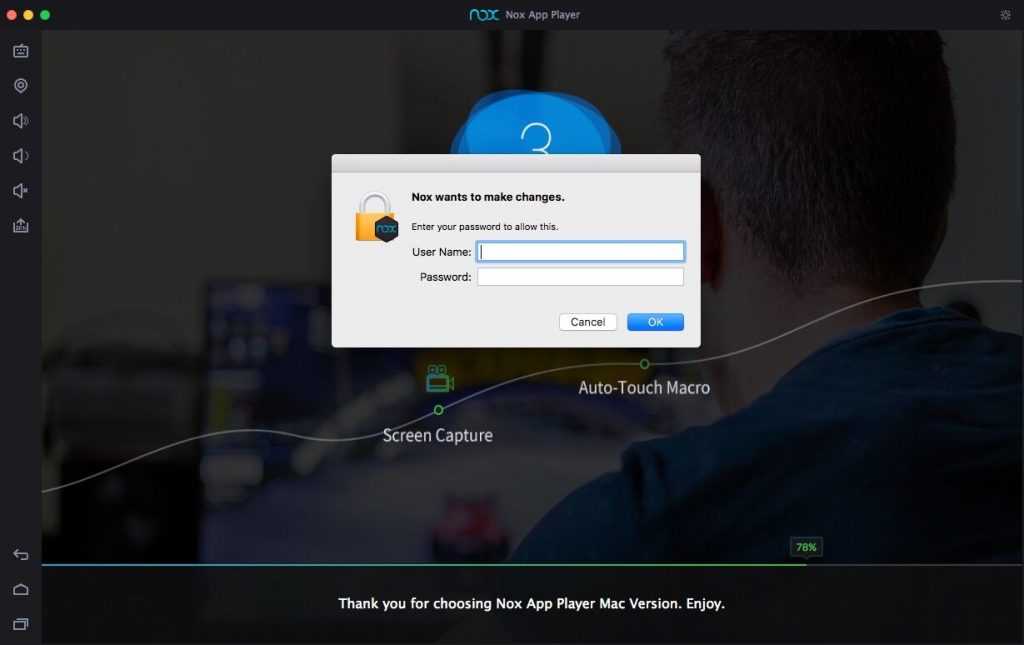
- Grant all the required permission so that you may proceed with the installation process
- Agree to the terms of service and follow the onscreen instructions to complete the installation process
Dry Scrubbers (nox Sox Vocs)
Within a few minutes you will have Nox Player for Mac installed and ready for use.
Nox Asx
Please note that you will need to sign in with your Google ID to use Nox.
Nox Os X 99
CONCLUSION
Serial Box Osx
If you want to access the Android applications on your Mac computer, Nox for Mac is the best option. You may have heard of BlueStacks as well and if you have used it, you may have noticed it is slow. Nox is better performing and smoothly runs all the apps on your computer. Using the above steps, you can easily complete the Nox for Mac download and installation. You can then sign in to it using Google ID and enjoy all your favorite Android apps on the bigger screen.